

Surfing and Back Pain: What the Science Really Says
Part 1 of the Complete Guide to Back Pain in Surfers: Understanding the Science

Before trying to fix back pain, it's worth understanding what it actually is. Photo by Max Herr
It probably wasn't the first time I'd heard someone talk about it.
I'm sure I'd heard family members, or someone else, complain about their backs before.
But this time was different.
He was a surfer.
One of the best in the lineup.
Someone I always enjoyed watching.
The waves were pumping that day.
Yet he stayed on the beach.
At the time, I couldn't understand it.
Back pain?
Had he hit the bottom?
Taken a fin to the back?
A while later, I bumped into him again and asked why he hadn't been surfing.
"My back," he said.
"I can't."
Then he kinda smiled and added,
"One day, when you're older, you'll understand."
About twenty years later...
I did.
Before getting into what the current research says about the relationship between surfing and low back pain, there's something important to understand.
You'll probably notice that the word "suggest" appears many times throughout this article.
That's not by accident.
When we look at scientific research, science usually points us in a direction rather than giving absolute truths.
Good science is constantly being questioned.
Updated.
Refined.
Sometimes even contradicted by newer evidence.
That's one of the things that separates it from the world of gurus, miracle fixes and overly simplistic answers.
That's also what makes science so refreshing. Nobody gets the final word.
So... Does Surfing Cause Back Pain?
There is still very little research on the relationship between surfing and low back pain.
Some studies are quite good.
Many have important limitations.
So, overall, the quality of the evidence is still moderate.
Honestly, I think we'll understand this topic much better in the future.
Even so...
There's an interesting pattern.
Studies carried out in different countries tend to show remarkably similar results.
The lower back frequently appears as one of the most affected areas in surfers.
Especially due to time spent paddling, prolonged spinal hyperextension, repetitive rotational movements, muscular fatigue, and the cumulative load built up over years of surfing.
But before you swap your surfboards for fishing rods, it's important to mention that the current evidence does not necessarily mean that surfing causes low back pain in a direct and inevitable way.
What the research does suggest, relatively consistently, is that certain aspects of surfing, especially repetitive and prolonged paddling, may contribute to the development of low back symptoms in some surfers.
A simple example.
If we keep our elbow flexed for two straight hours, there's a decent chance it'll start to ache.
But that doesn't automatically mean elbow flexion causes pain.
The same idea applies to surfing research.
These studies should be interpreted critically.
And with some perspective.
Pain is complex.
Multifactorial.
And influenced by far more than a single movement or posture.
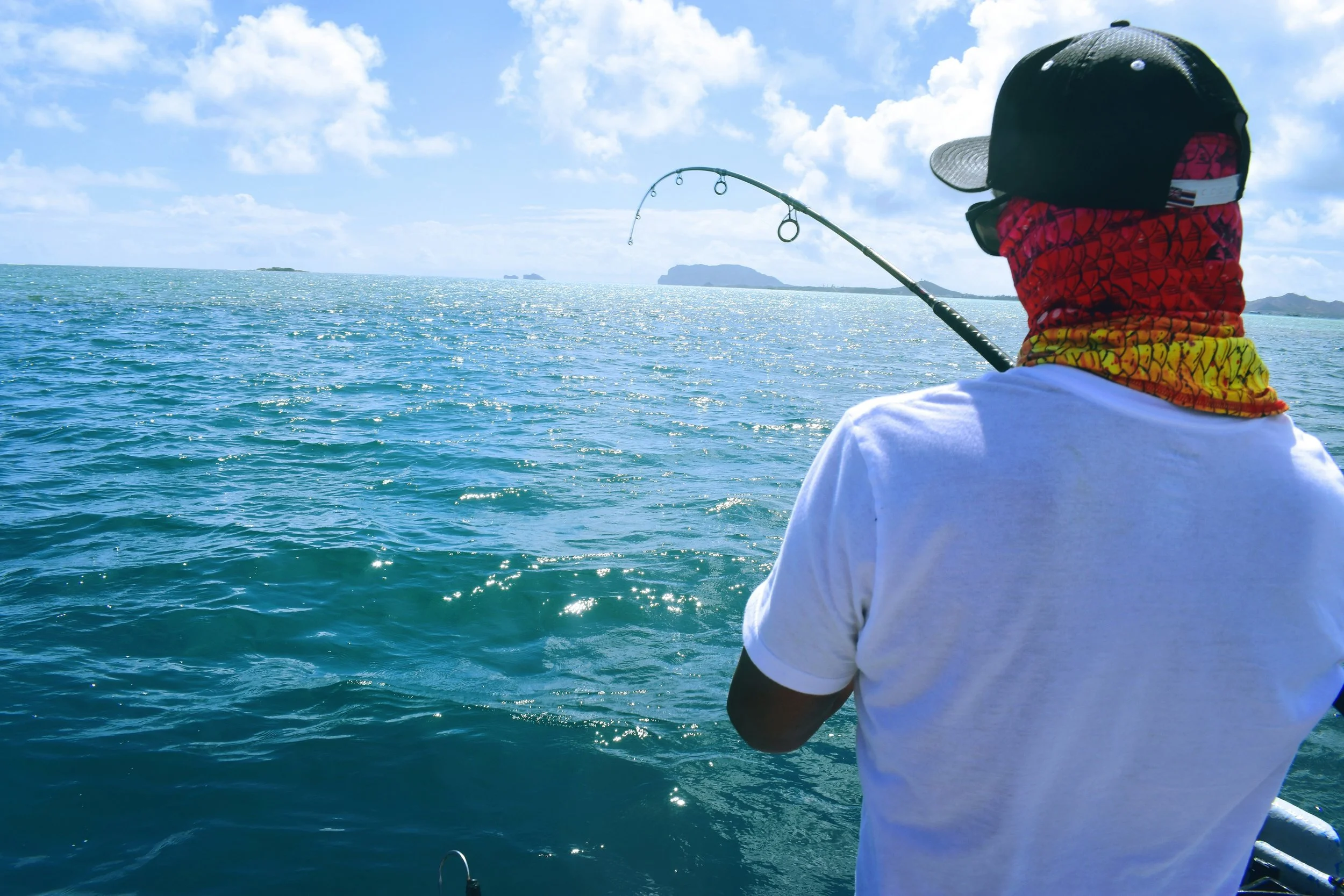
No need to become a full-time fisherman just yet. Photo by Drew Farwell
What Do the Main Studies Say?
Research by Furness and colleagues linked prolonged paddling with chronic low back symptoms in both recreational and competitive surfers.
A later study from New Zealand by Remnant and colleagues found similar results.
Suggesting that risk may increase with years of practice and total surfing exposure.
More recently, a systematic review gathering most of the available research on chronic surfing injuries found exactly the same pattern.
The lower back.
The neck.
And the shoulders.
All consistently appeared among the most affected areas.
The review suggested that prolonged spinal hyperextension during paddling may play an important role in the development of persistent symptoms.
Taken together, these studies suggest that many low back problems in surfing may develop slowly over time.
Through repeated exposure.
Accumulated load.
Rather than one single cause or event.
Pain Does Not Always Mean Serious Damage
It's important to understand that experiencing low back pain while surfing doesn't automatically mean "serious injury," "a blown disc," or "the end of your surfing life."
Most complaints seem to be related to accumulated sensitivity.
Excessive load.
Muscular fatigue.
And the body struggling to tolerate certain positions for long periods of time.
Remember the bicep example mentioned earlier?
Pain Is More Complex Than Most People Think
Now comes another really interesting part.
And one that is rarely mentioned in these studies.
Today we know that pain intensity can also be influenced by many factors beyond the spine and muscles.
Stress.
Anxiety.
Poor sleep.
Fatigue.
Fear of movement.
Worry about pain.
A sedentary lifestyle.
Excessive training load.
Poor recovery.
Even difficult periods in life.
All of these can significantly influence how the brain interprets signals coming from the body.
In fact, we now know that two people with very similar scans can have completely different experiences.
One may feel almost nothing.
While the other may experience intense pain.
The opposite also happens.
Some surfers have "terrible-looking" MRI scans and surf without major limitations.
Others have relatively normal imaging and deal with persistent pain.
The body does not work like a simple machine where "wear and tear" automatically equals pain.
As we've already seen, pain seems to result from the interaction between many factors.

Pain is a bit like humans: complicated, sometimes unpredictable, and shaped by far more than tissues and anatomy.
What About the Guy Who Already Solved All This?
Whenever someone appears online claiming to have the magical solution for low back pain in surfers, that person should probably be questioned a little.
If decades of research involving thousands of surfers still can't reach a fully definitive conclusion about surfing and low back pain...
...how exactly did the enlightened guy on Instagram figure it all out between two beach videos and a mobility reel filmed in his living room?
Divine knowledge?
Probably not.
Usually, when someone offers an extremely simple answer to a very complex problem...
...a healthy amount of skepticism is probably a good idea.
Solutions?
Surfing itself is also part of the solution.
It is a fantastic lifestyle and, honestly, one of the best things humans ever accidentally invented.
But, in order to enjoy these benefits for as long as possible, a few changes can make a huge difference for us surfers:
Sleeping better.
Recovering properly.
Managing stress.
Getting stronger.
Improving general fitness.
Slowly rebuilding the body’s resilience.
It may not be possible to change everything at once.
Some things are outside our control.
But we can start with the things we can actually change.
We'll explore all of that further throughout this guide.
First, we'll look at when back pain might be something more serious.
Then we'll explore the foundations of recovery.
And finally, we'll look at the practical steps that may help you build a body that's better prepared for the demands of surfing.
But before we get there, there's one important question we should answer first.
When should you actually worry about back pain?
Knowing when to seek medical assessment is exactly what Part 2 is about.
JB
Looking for a practical plan?
The Strong & Resilient Back Program turns the principles discussed throughout this series into a practical system designed to help surfers build a stronger, more resilient back and keep surfing for years to come.
Why you can trust this article
This article was written by Joao Batata, a clinician specialising in musculoskeletal health, exercise physiology, sleep medicine, and strength & conditioning. He has also been chasing waves for more than 30 years.
Every article published by The Surfer's Health is based on peer-reviewed scientific research, critically appraised through the combined lens of clinical practice and real-world surfing experience. The goal is not simply to explain the science, but to help surfers understand what it means in practice.
Articles are reviewed and updated whenever new evidence meaningfully changes current understanding.
The information provided is for educational purposes only and should not replace personalised medical advice. If you have severe, persistent, or worsening symptoms, consult a qualified healthcare professional.
References
Furness J, Hing W, Abbott A, Walsh J, Sheppard JM, Climstein M. Retrospective Analysis of Chronic Injuries in Recreational and Competitive Surfers: Injury Location, Type, and Mechanism. International Journal of Aquatic Research and Education. 2014.
Remnant D, Furness J, Hing W, et al. Gradual-Onset Surfing-Related Injuries in New Zealand Surfers. Sports. 2020.
Hanchard NCA, Goodwin VA, Lomas P, et al. Chronic and Gradual-Onset Injuries and Conditions in the Sport of Surfing: A Systematic Review. Sports Medicine. 2021.
Mendez-Villanueva A, Bishop D. Physiological Aspects of Surfboard Riding Performance. Sports Medicine. 2005.
