

Surfing and Back Pain: The Foundations of Recovery
Part 3 of the Complete Guide to Back Pain in Surfers: The Foundations of Recovery.
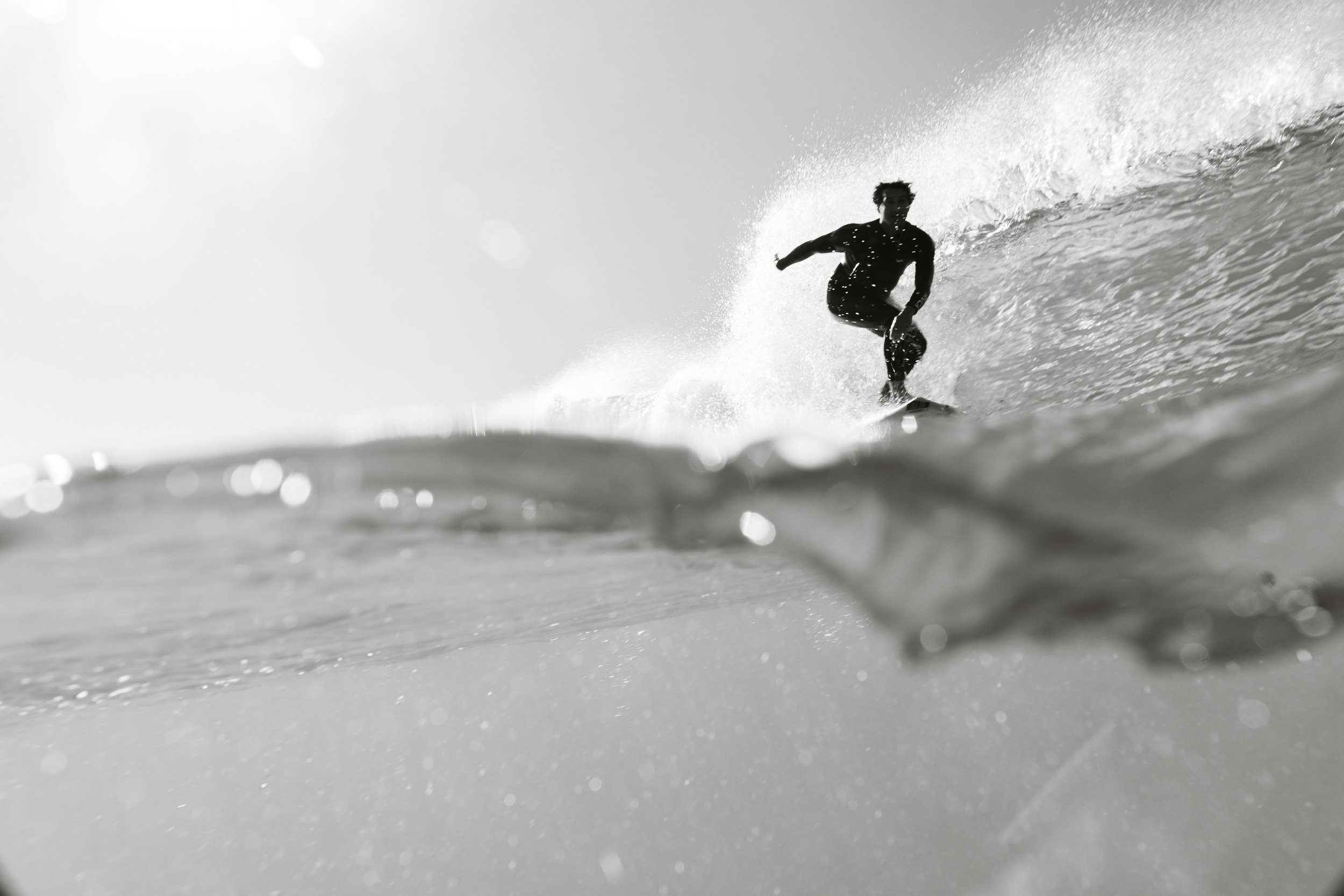
The foundations of recovery often lie beneath the surface. Photo by Reed Naliboff
If you've read Part 1, you already know that the relationship between surfing and low back pain is probably a little more complicated than most Instagram reels would have you believe.
Research on surfing is growing.
But there's still a long way to go.
There simply isn't much surf-specific research available yet.
Although the studies that do exist point in a fairly consistent direction, they still leave us with a much more practical question:
If your back already hurts... what can you do about it?
Fortunately, this is where decades of research on low back pain in the general population become incredibly valuable.
While surfers have some unique physical demands, they're still human.
And, in many ways, the principles that seem to help people with back pain are remarkably similar whether they surf, run, lift weights, or simply want to live an active life.
Modern pain science has made enormous progress over the last few decades.
Interestingly, many of those advances have gradually shifted our focus away from trying to "fix" the spine.
Modern pain science suggests the answer is often much broader than that.
The Problem With Looking For One Magic Solution
If you've ever had back pain, you've probably received advice from every direction imaginable.
"Your hips are too tight."
"Your core is weak."
"Hip mobility, mate. That's the secret."
"You need to do this exercise."
"It's your discs."
"It's your mattress."
"It's inflammation."
"It's the fascia."
"You need to align your spine."
And so on.
The problem is that low back pain is one of the most studied health conditions in the world.
After decades of research involving hundreds of thousands of people, multiple clinical guidelines and countless systematic reviews, one thing has become clear.
There probably isn't one single treatment that works for everyone.
That may sound disappointing.
Life would certainly be easier if there were one magic exercise, one perfect stretch, or one treatment that fixed every painful back.
Personally, though, I think that's actually good news.
Because it means that if stretching hasn't "fixed" your back, or if that series of expensive treatments didn't magically solve everything, you haven't failed.
Your back is simply behaving like... a back.
Complex.
Human.
Sometimes frustrating.

When it comes to back pain, everyone seems to have an opinion. Photo by Jon Tyson
Modern Pain Science Thinks Differently
For decades, low back pain was approached almost like a mechanical problem.
Almost like your car developing an engine fault.
You take it to the mechanic.
They find the broken part.
Replace it.
And you're back on the road.
For many years, we tried to think about back pain in much the same way.
Find the damaged structure.
Whatever it is.
Fix it.
Problem solved.
Simple.
To be honest, as a health professional, there are days when I wish it really worked like that.
After seeing countless people with back pain over the years, I can tell you it would make life much easier. And considerably less frustrating.
And sometimes it actually does work that way.
Someone develops pain because of a very specific problem.
You identify it.
Treat it.
They improve surprisingly quickly.
Those cases absolutely exist.
But, more often than not, things are a little messier.
Today we know that pain is influenced by much more than muscles, joints and discs.
Physical load matters.
But so do recovery.
Sleep.
Stress.
Previous experiences.
General health.
Physical conditioning.
Confidence in movement.
Even the meaning we attach to pain itself.
That's one of the reasons why two people with almost identical MRI scans can have completely different experiences.
One may surf every morning with barely any symptoms.
Another may need to think twice before getting up from the toilet.
The scan didn't change.
The person did.
Which is exactly why modern clinical guidelines have gradually shifted away from trying to "repair" the spine and towards helping people become more resilient, more active and more capable.
And that's probably good news for us, surfers.
Because surfing isn't simply something we do.
For many of us, it's something we hope to keep doing for the rest of our lives.
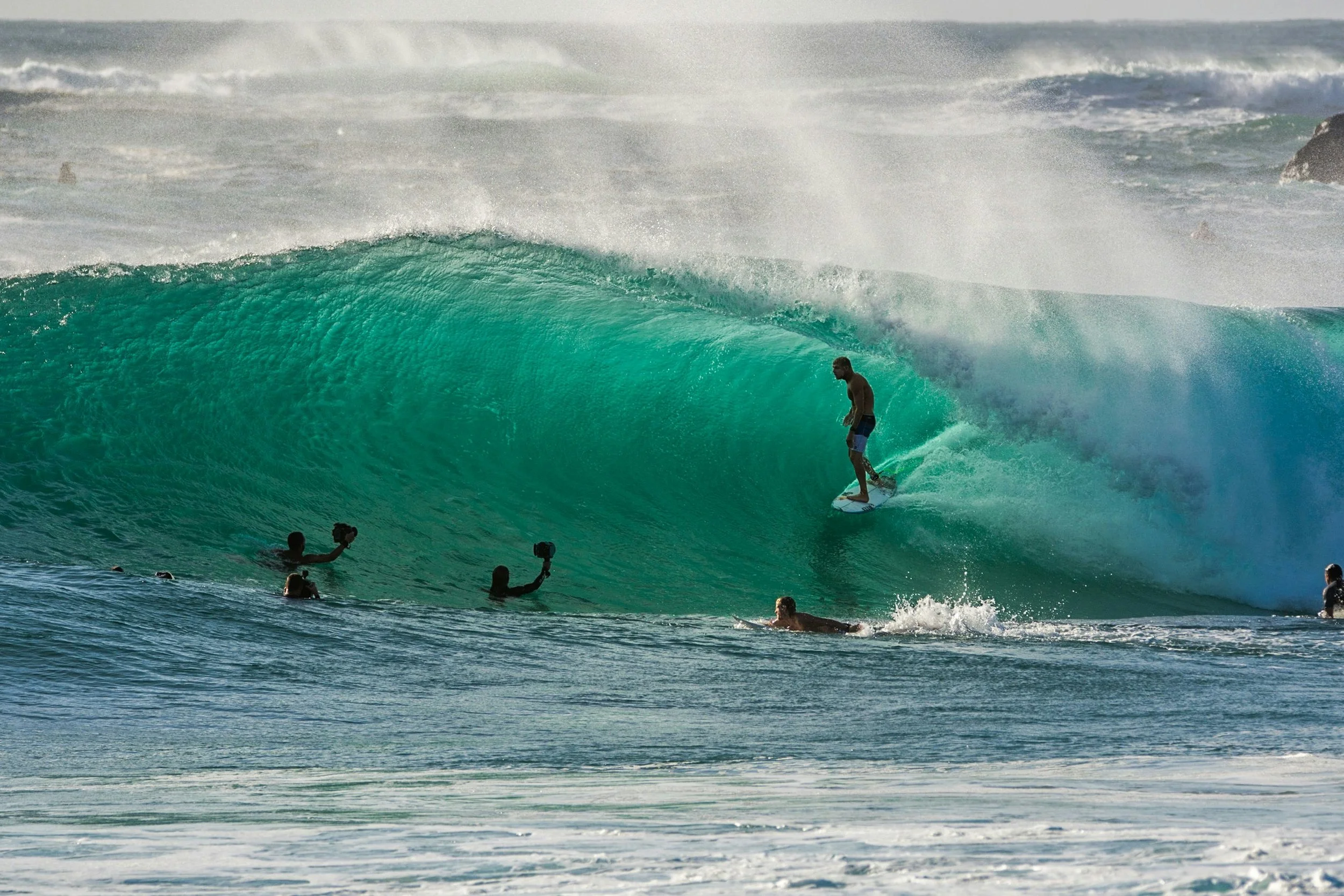
Surfing isn't simply something we do. It's one of the things that makes us feel most alive. Photo: Mick in the pit by Brandon Compagne
Prepare Your Body for the Demands of Surfing
Surfing places real physical demands on the body.
Hours spent paddling.
Repeated pop-ups.
Rotational movements.
Rapid compressive forces.
Long sessions.
Fatigue…
None of that is inherently bad.
It's simply what surfing demands.
Every physical activity places demands on the body.
And every body has a certain capacity to tolerate those demands.
One of the simplest ways to think about back pain is this:
Problems often appear when the demands placed on the body exceed the body's current capacity to tolerate them.
Notice I didn't say cause pain.
I said they may increase the likelihood of symptoms appearing.
That's an important difference.
Capacity isn't fixed.
Like strength, aerobic fitness or balance, it changes throughout our lives.
If we don't keep challenging our physical abilities...
If we spend long periods out of the water...
If we sleep poorly...
Become less active...
Go through particularly stressful periods...
Or simply get older...
Our physical capacity often declines.
The demands of surfing, however, don't really care.
Imagine deciding, after spending some time away from the ocean, to paddle out on the biggest swell of the year.
You'd probably still remember how to surf.
Your body, however, might not remember what hours of paddling, duck diving and repeated pop-ups feel like.
Would your shoulders, back and arms send you some strongly worded complaints the next morning?
I'd be surprised if they didn't.
The same idea may help explain many episodes of back pain.
The problem isn't necessarily that your spine suddenly became "bad."
It may simply be that, at that particular moment, the demands placed upon it exceeded what your body was prepared to tolerate.
I'm not talking about creating a perfect spine.
To be honest, I'm not even sure what that means.
I'm talking about gradually building a body that's capable of handling the physical demands of surfing.
And surfing asks quite a lot.
Fortunately, that probably doesn't require a collection of highly "surf-specific" exercises performed while balancing on a Bosu ball, despite what social media might have you believe.
(Sorry if you've already bought the Bosu ball)
It usually starts with things that are much less exciting.
Things that are simple.
But not always easy.
Getting a little stronger.
Improving your general fitness.
Sleeping a little better.
Recovering properly.
Gradually exposing your body to the physical demands of surfing.
Managing the things that are actually within your control.
You don't have to change everything overnight.
In fact, trying to improve everything at once is usually a good way to improve nothing at all.
Start with one or two things you can realistically change.
Build from there.
Then keep going.
Not because any one of those things is a miracle cure.
But because, together, they increase something that’s very important:
Your capacity.
None of these guarantee you'll never experience back pain.
Nothing does.
But a body with greater physical capacity is probably better equipped to tolerate long surf sessions, back-to-back days of good swell, stressful weeks at work, or simply the gradual changes that come with getting older.

Surfing is so much fun that it's easy to underestimate the demands it places on our bodies. Photo: Somewhere south of Gibraltar by Jarno Colijn
What's Next?
We've talked about the principles behind recovery.
But principles are only useful if you know how to apply them.
So, in Part 4, we'll move from theory to practice.
We'll explore how to build a body that's better prepared to recover, adapt and keep surfing.
We'll look at how to think about exercise, sleep, nutrition, training, and the everyday habits that may help you stay healthier, recover better, and keep surfing for years to come.
JB
Understanding recovery is one thing. Applying it is another.
The Strong & Resilient Back Program brings together everything we've discussed throughout this series and turns it into a practical, step-by-step plan designed specifically for surfers.
Why you can trust this article
This article was written by Joao Batata, a clinician specialising in musculoskeletal health, exercise physiology, sleep medicine, and strength & conditioning. He has also been chasing waves for more than 30 years.
Every article published by The Surfer's Health is based on peer-reviewed scientific research, critically appraised through the combined lens of clinical practice and real-world surfing experience. The goal is not simply to explain the science, but to help surfers understand what it means in practice.
Articles are reviewed and updated whenever new evidence meaningfully changes current understanding.
The information provided is for educational purposes only and should not replace personalised medical advice. If you have severe, persistent, or worsening symptoms, consult a qualified healthcare professional.
References
Brinjikji W, Luetmer PH, Comstock B, Bresnahan BW, Chen LE, Deyo RA, Halabi S, Turner JA, Avins AL, James K, Wald JT, Kallmes DF, Jarvik JG. Systematic literature review of imaging features of spinal degeneration in asymptomatic populations. American Journal of Neuroradiology. 2015;36(4):811-816.
Buchbinder R, van Tulder M, Öberg B, Costa LM, Woolf A, Schoene M, Croft P. Low back pain: a call for action. The Lancet. 2018;391(10137):2384-2388.
Burgess J, Lambert M, Burgess T, Ross A. Sport-related injuries among South African competitive surfers: a descriptive epidemiological study. South African Journal of Sports Medicine. 2018;30(1):1-7.
Campos TF, Maher CG, Fuller JT, Steffens D, Attwell S, Hancock MJ. Prevention strategies to reduce future impact of low back pain: a systematic review and meta-analysis. British Journal of Sports Medicine. 2021;55:468-476.
Furness J, Hing W, Abbott A, Walsh J, Sheppard JM, Climstein M. Retrospective analysis of chronic injuries in recreational and competitive surfers: injury location, type, and mechanism. International Journal of Aquatic Research and Education. 2014;8(4):277-287.
Hartvigsen J, Hancock MJ, Kongsted A, Louw Q, Ferreira ML, Genevay S, Hoy D, Karppinen J, Pransky G, Sieper J, Smeets RJ, Underwood M. What low back pain is and why we need to pay attention. The Lancet. 2018;391(10137):2356-2367.
Hanchard NCA, Lomas P, et al. Chronic and gradual-onset injuries and conditions in the sport of surfing: a systematic review. Sports Medicine. 2021.
Louw A, Zimney K, Puentedura EJ, Diener I. The efficacy of pain neuroscience education on musculoskeletal pain: a systematic review of the literature. Physiotherapy Theory and Practice. 2016;32(5):332-355.
Mendez-Villanueva A, Bishop D. Physiological aspects of surfboard riding performance. Sports Medicine. 2005;35(1):55-70.
Qaseem A, Wilt TJ, McLean RM, Forciea MA; Clinical Guidelines Committee of the American College of Physicians. Noninvasive treatments for acute, subacute, and chronic low back pain: a clinical practice guideline from the American College of Physicians. Annals of Internal Medicine. 2017;166(7):514-530.
Remnant D, Furness J, Hing W, et al. Gradual-onset surfing-related injuries in New Zealand surfers. Sports. 2020;8(4):52.
Traeger AC, Buchbinder R, Elshaug AG, Croft PR, Maher CG. Care for low back pain: can health systems deliver? Bulletin of the World Health Organization. 2019;97:423-433.
Vlaeyen JWS, Linton SJ. Fear-avoidance and its consequences in chronic musculoskeletal pain: a state of the art. Pain. 2000;85(3):317-332.
National Institute for Health and Care Excellence (NICE). Low Back Pain and Sciatica in Over 16s: Assessment and Management (NG59). London: NICE; Updated 2020.
